
MENOPOLOOZA 2 DATA
〰️
MENOPOLOOZA 2 DATA 〰️
Menopolooza 2: A Community Reckoning on Women's Midlife Health
Victoria, British Columbia · May 16-17, 2026
On a spring weekend in Victoria, more than 130 women travelled from across the region for something that doesn't yet exist anywhere else: a two-day gathering that treats women's midlife health as the serious, under-researched, life-and-death issue it is. Menopolooza 2 was part conference, part community, and part research in real time. It was covered by CBC News, the Victoria Times Colonist, and Royal Roads University, and it has become a movement - not just an event.
This is a short summary of what we heard, what we learned, and what has to change.
Why this matters
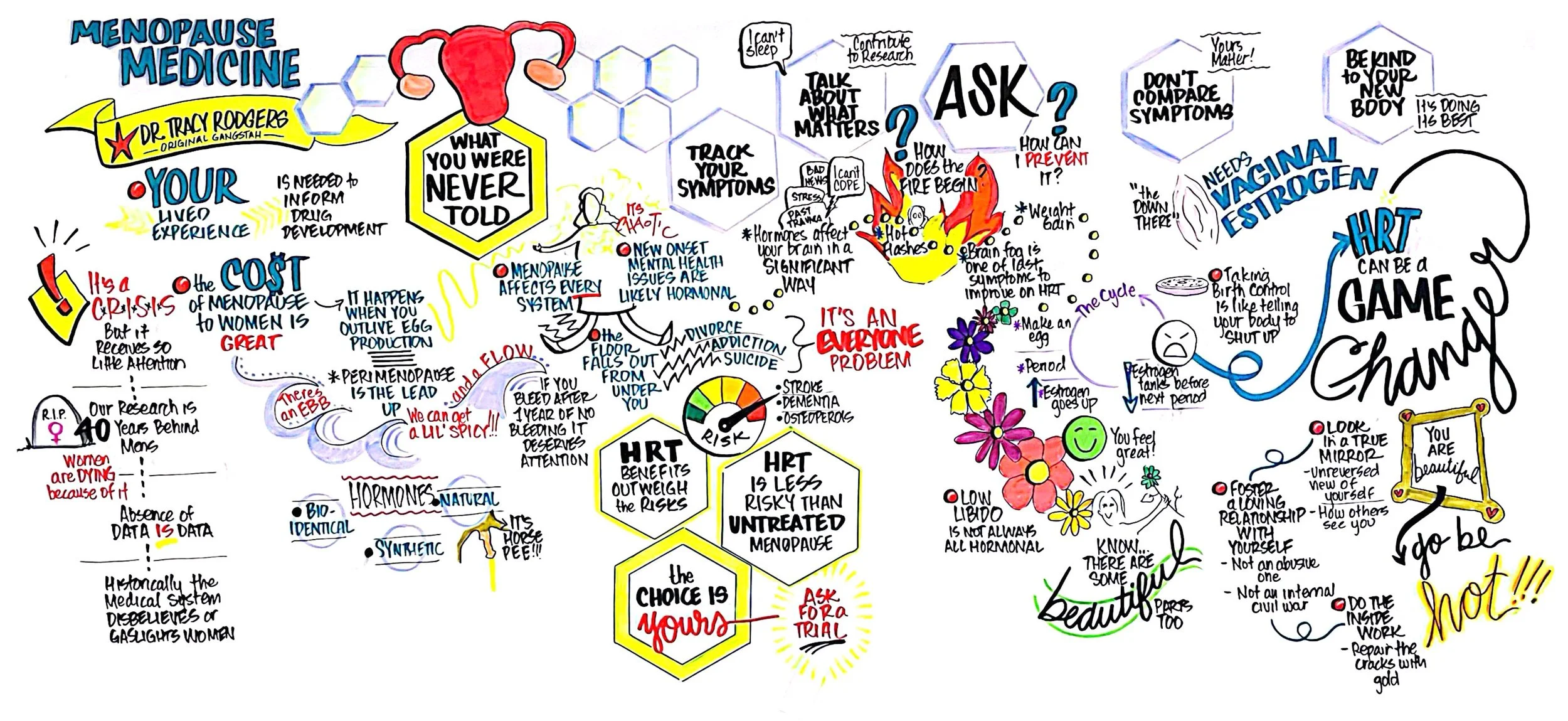
For decades, women in perimenopause and menopause have been told that what they're experiencing is "just stress," "just aging," or "a normal part of being a woman." It is none of those things. As estrogen and progesterone decline, they destabilize the very brain systems that govern mood, sleep, anxiety, focus, and the body's response to alcohol and other substances. Research into women's midlife health sits roughly 40 years behind men's medicine - and women are falling through that gap every day.
We call the missing piece Biological Capital: the hormonal, neurological, and physical assets women carry into midlife that the medical system has largely left unprotected. When that foundation collapses, social support and willpower alone are not enough.
What we heard from the room
Before a single session began, over one hundred women answered live polls about how they were arriving. The picture was unmistakable. The most common word for how they felt that morning was hopeful - sitting right beside tired, anxious, overwhelmed, and depleted. What they most wanted was to understand what is happening in their own bodies. What they most feared was being dismissed by the very system meant to help them. And what they hoped to leave with, more than anything, was the feeling of being not alone.
These women were not uninformed. They knew they were being underserved. What they lacked was a system willing to take them seriously.
Two urgent priorities
Biological Capital. The largely preventable physical toll of perimenopause and menopause on women's musculoskeletal, hormonal, pelvic, neurological, and metabolic health - deepened by a research and training gap across the medical system.
Substance use and mental health. A profoundly under-researched intersection where hormonal change is driving rising alcohol use, disordered eating, mental health crises, and relapse in women between 40 and 58 - a population that treatment has largely failed to see. Women aged 45 to 64 now show the sharpest rise in hazardous drinking of any demographic. This is not a willpower problem. It is a neuroendocrine one.
Nowhere was the stakes clearer than in a session where 94 women anonymously named the cruellest things their inner critic tells them. Alongside the familiar not good enough and unlovable, women reported thoughts that crossed into passive death wishes and suicidal ideation. When those same women were asked what they would say to a loved one who felt that way, the answers poured out: I love you. You are enough. You are not alone. Women hold a deep reservoir of compassion. They have simply never been given permission - or the biological understanding - to turn it inward.
What we're calling for
The full report sets out eight recommendations for policymakers and funders. In brief, we are asking for: funded research at the perimenopause-substance use-mental health intersection; menopause literacy across every health profession; hormonal assessment built into mental health and addiction screening; and hormone-informed treatment pathways that meet midlife women where they actually are.
We are also building the model. In direct response to this gap, Bryn Meadows and Dr. Tracy Rodgers created The Inside Work - a clinical program for women at midlife that treats the biology and the story together, integrating hormonal literacy, evidence-based recovery work, and shame resilience.
The bottom line
When women are given accurate information, community, and permission to take their health seriously, they do extraordinary things. Over a hundred women left Menopolooza with a fire lit - and they went home and told the women in their lives. Imagine what becomes possible when we invest in this at scale.
Read the full report and partner with us.
Bryn Meadows, MA, RPC-MPCC, is a counsellor specializing in women's midlife health, addiction, and shame resilience, and the founder of Menopolooza and The Inside Work. Menopolooza is co-created with Dr. Tracy Rodgers, MD, FRCSC, OB-GYN.
Clara Hughes, OC, OM, MSC
Clara Hughes is a six-time Olympic medallist and the only athlete in history to win multiple medals at both the Summer and Winter Games, two in cycling (Atlanta 1996) and four in speed skating (2002, 2006, 2010). Canada's flag-bearer at the Vancouver 2010 Winter Olympics, she is an Officer of the Order of Canada and a member of Canada's Sports Hall of Fame. Since retiring from sport, Clara has become one of Canada's most influential mental health advocates: she was the founding spokesperson for Bell Let's Talk, and in 2014 rode 11,000 km across Canada, Clara's Big Ride- to break the stigma around mental illness. In her bestselling memoir, Open Heart, Open Mind, she speaks candidly about her own experiences with depression and early substance use, and about what recovery and self-acceptance have made possible.